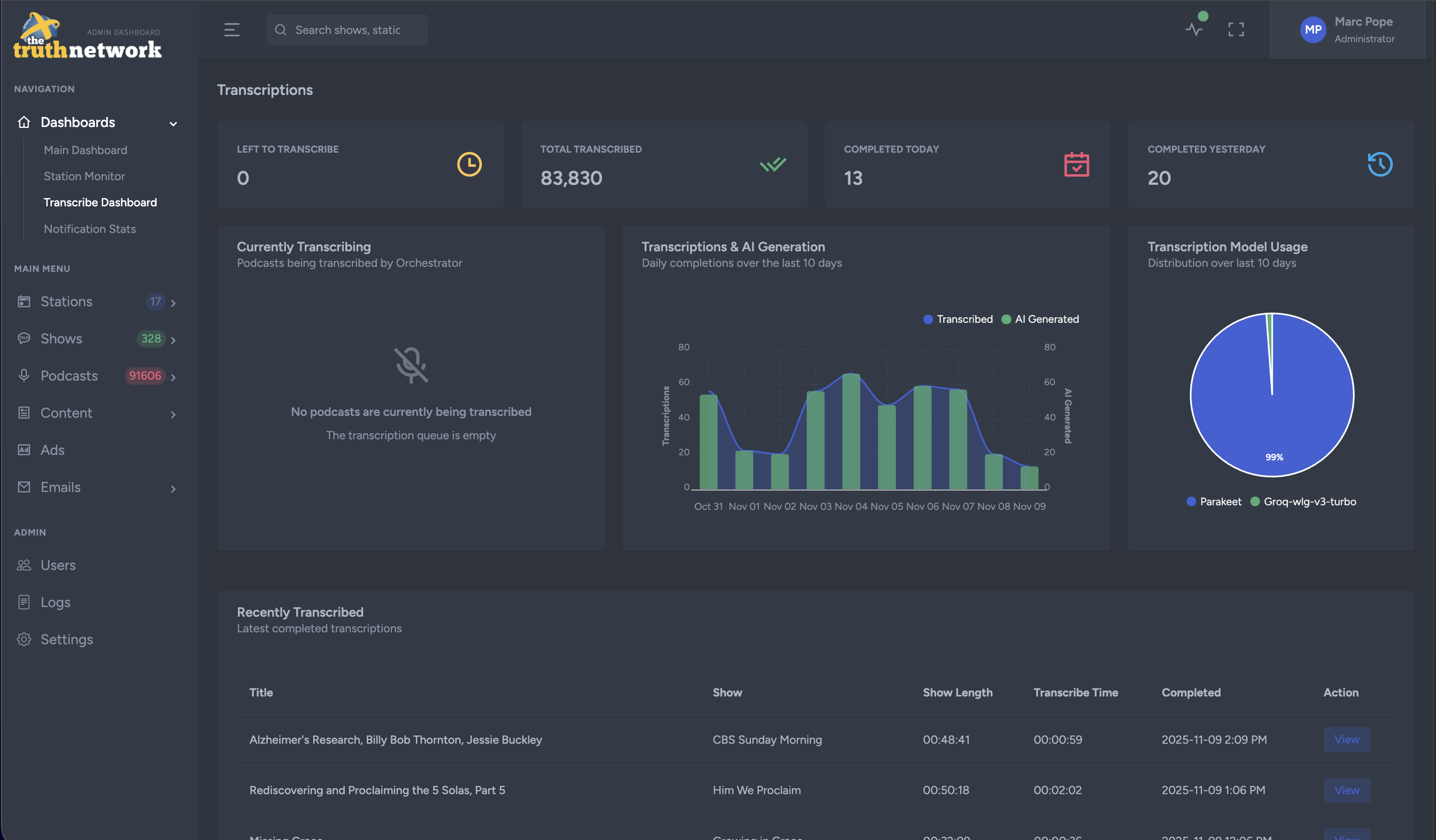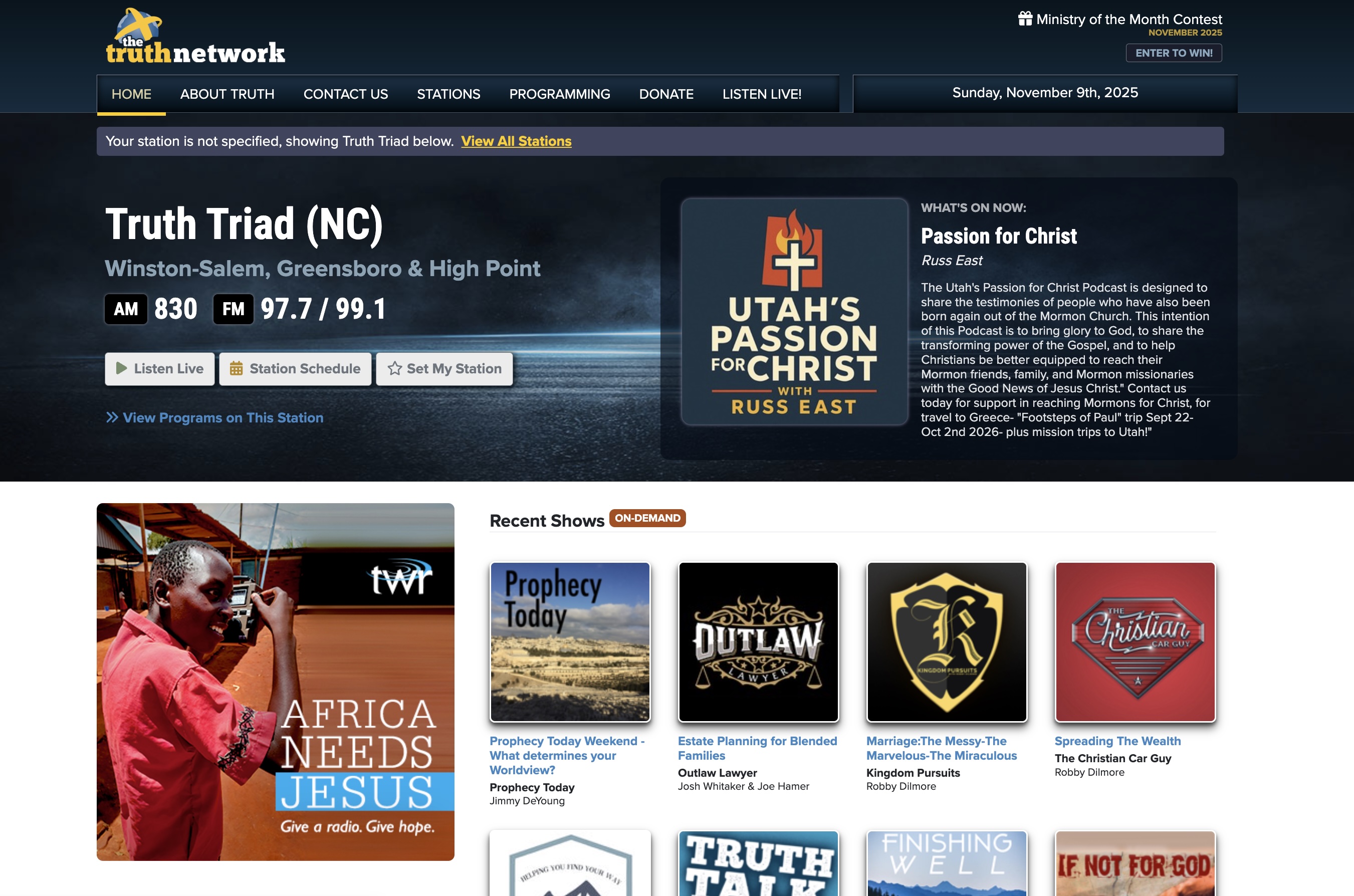
I built TruthNetwork.com over years as the operating platform behind a multi-station radio network. It is the public website, publishing system, show and schedule database, advertising manager, listener-feedback system, podcast archive, notification engine, API and backend used to run the network.
The result is measurable. The site grew from 72 visitors a month to roughly 50,000 a day. Google now indexes hundreds of thousands of its pages. That growth came from building a system that turns every broadcast and podcast into useful, discoverable content without creating a matching amount of manual work.
A radio network needs more than a website
Shows move across stations and schedules. Ads need placement and tracking. Podcast feeds publish on their own clocks. Listeners want favorites, current episodes and reminders tied to the station they use. Staff need one place to manage all of it without touching code.
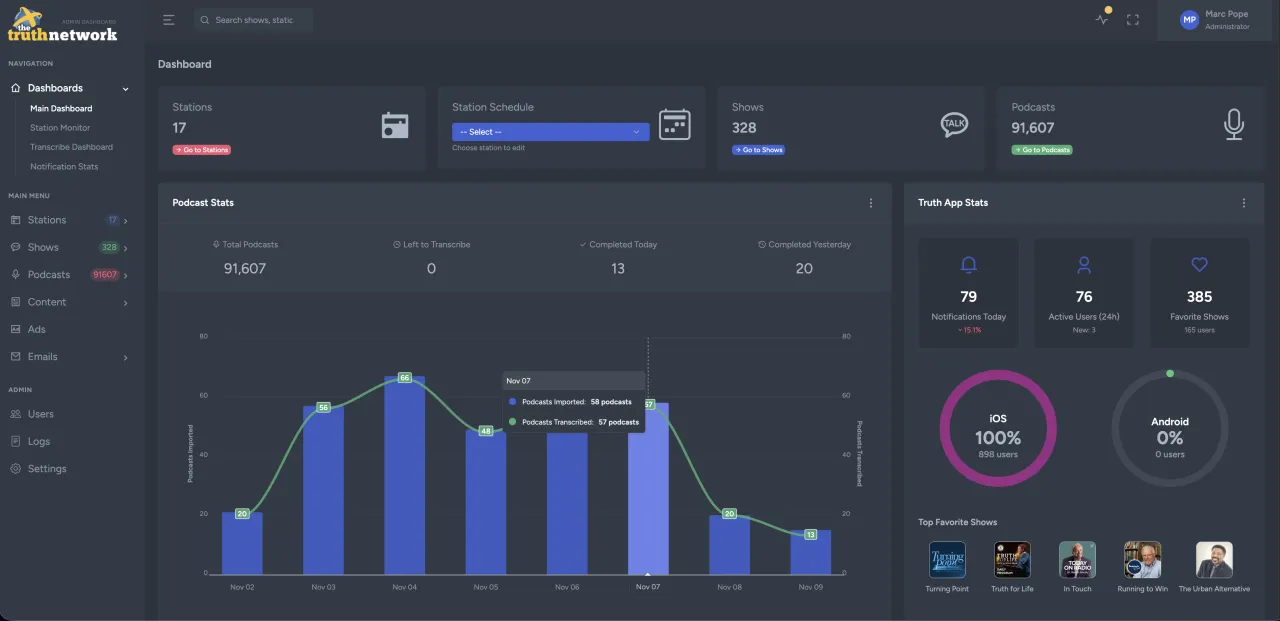
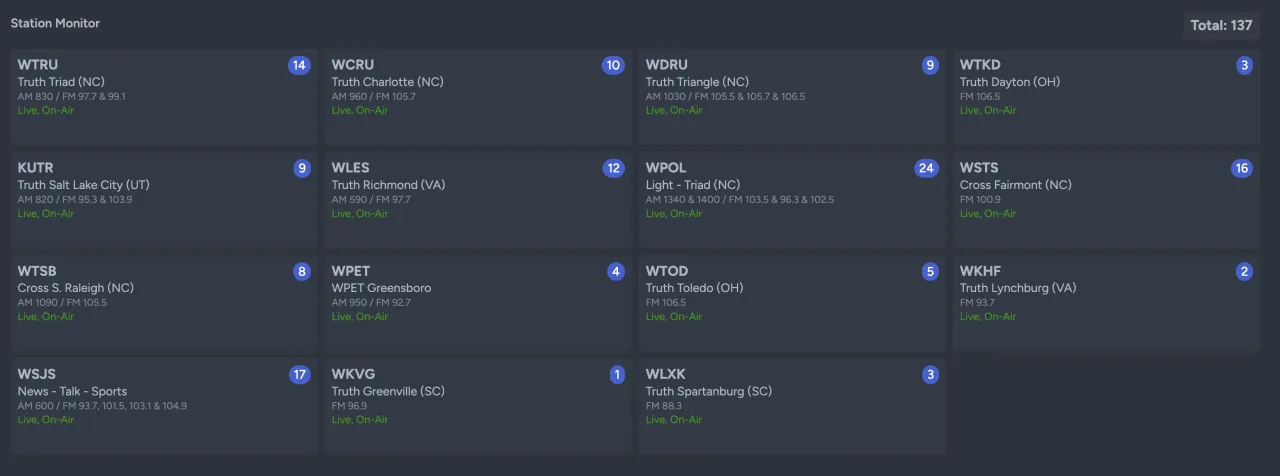
I built the backend around those operating realities. It manages stations, programs, hosts, schedules, advertisements, podcast feeds, feedback, users and the publishing workflows that connect them. The public interface is only one client of a much larger platform.
The AI content engine
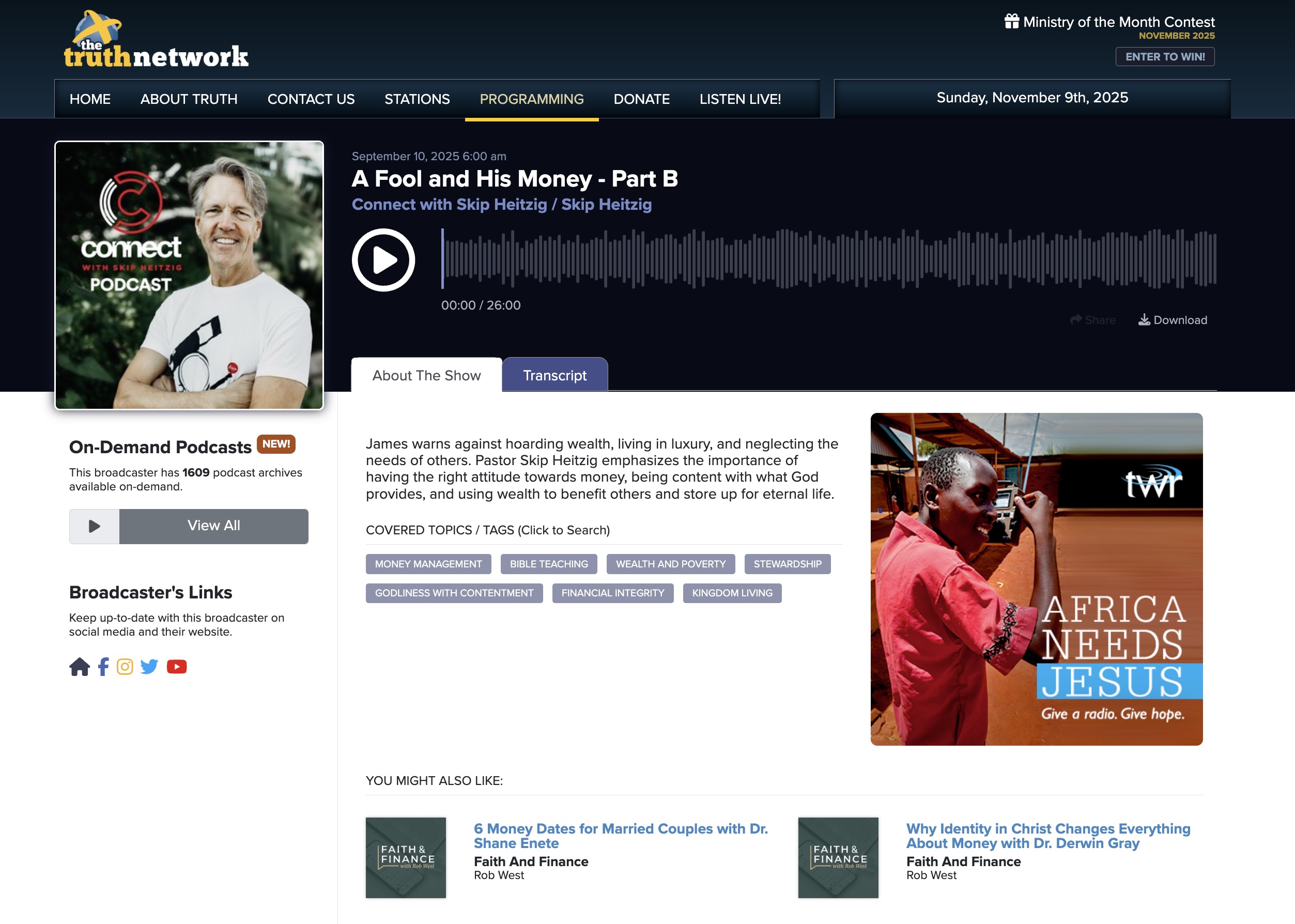
The platform continuously scans the shows each station carries and the RSS podcast feeds behind them. When a new episode appears, it downloads the audio, transcribes it, creates a summary and keyword set, and publishes structured content that listeners and search engines can use.
- Feed discovery and scheduling. The system watches roughly 100 podcast feeds, identifies new audio and queues work without staff intervention.
- Ephemeral GPU inference. It queries Vast.ai for the lowest-cost suitable GPU, starts the instance, pulls my transcription image from Docker Hub, processes the audio and shuts the server down when the work is complete.
- Containerized consistency. The same versioned Docker image carries the inference environment every time, so a cheaper temporary server does not create a different result.
- Structured enrichment. The transcript becomes summaries, search keywords, metadata and normalized content for the publishing pipeline.
- Scale without proportional cost. Compute exists only while there is audio to process. The platform finds its own capacity and releases it when finished.
Hundreds of thousands of useful pages
Before this system, the site had roughly seven static pages and almost no search audience. The content engine turned the network's existing audio library into more than 150,000 indexed episode and show pages, then kept building as new programs aired. Traffic increased by more than 600,000 percent, with daily visitors regularly reaching 50,000.
The point was never to generate filler. Each page begins with a real broadcast, a real host and a real conversation. AI makes that source material searchable and gives the small network a publishing capacity it could not staff manually.
Built for web and mobile listeners
The network's mobile apps use the same platform and APIs. Listeners can follow favorite shows, receive a reminder when a favorite is about to air on their chosen station, and get notified when a new podcast episode is published. Time-zone handling and user-defined quiet hours keep those messages useful across the United States.
Memcached, CDN-backed audio delivery and dynamic XML sitemaps keep the large catalog responsive and visible. Firebase Cloud Messaging powers notifications, while favorites and listening preferences carry the user's experience across the platform.
What years of ownership looks like
Truth Network is a long-running product, not a launch snapshot. I have continued to extend it as the organization, catalog and audience grew. The work spans product decisions, data modeling, infrastructure, AI inference, publishing automation, backend operations, APIs, mobile experiences and the unglamorous reliability work that keeps all of those pieces moving together.
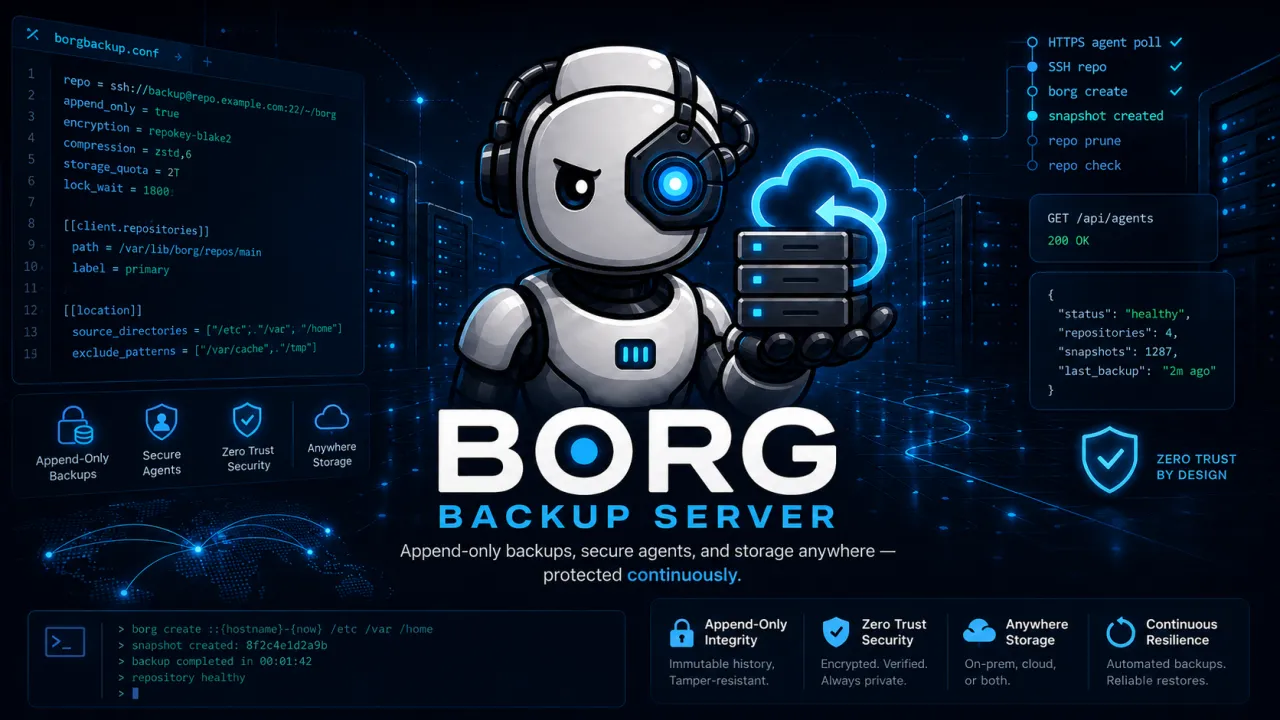
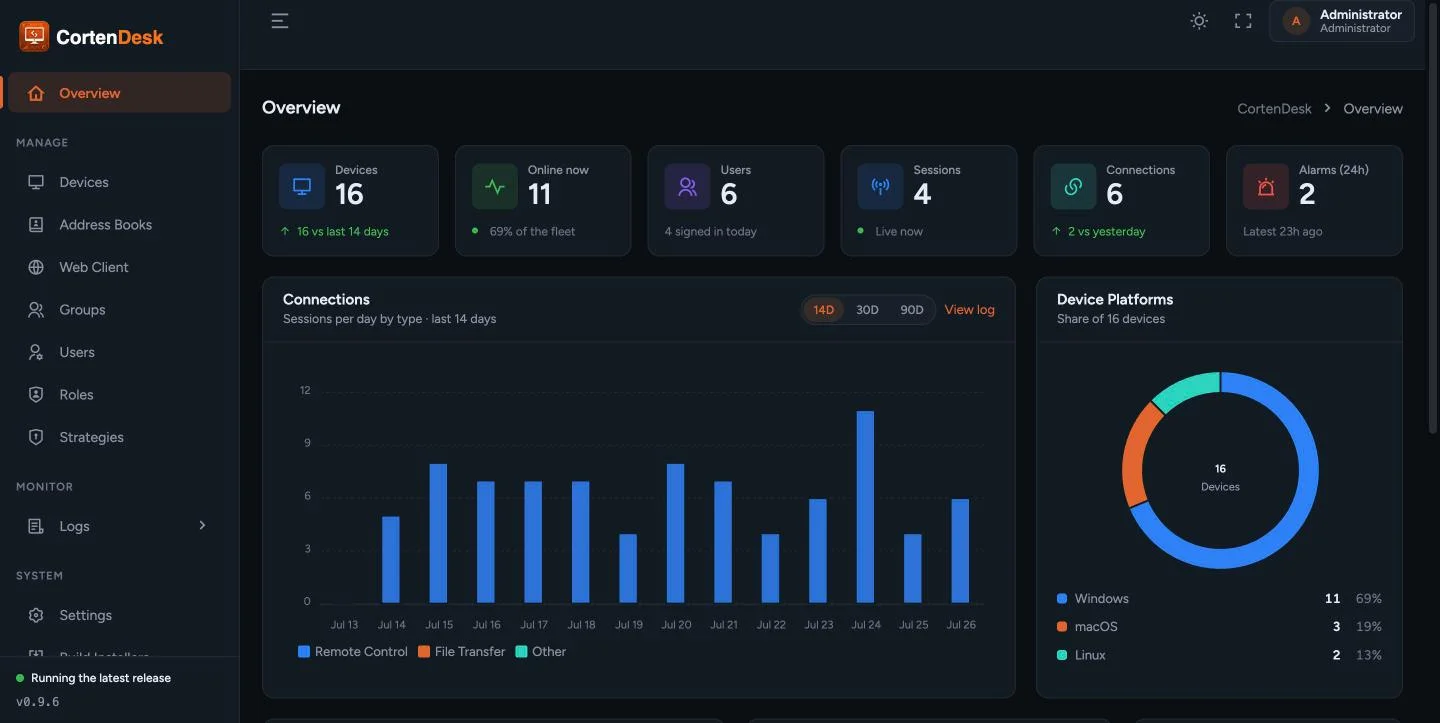
BBS proves I can turn deep infrastructure into a product. CortenDesk proves how quickly I can identify and fill a missing-product gap. Truth Network proves I can own and evolve a complex platform for years, tie it to the way an organization operates and create growth at a scale the original team could not reach manually.